20th Anniversary of the Humanas Network
The Humanas Network was established in 2004 at the initiative of the Red Cross of Serbia, with the aim of connecting together foundations and civil society organizations working to protect the human rights of older persons and improve their position in society. Since its establishment, Philanthropy has been actively involved in the Network’s work, which has been recognized as a relevant partner by public policy stakeholders. Trust in the Network’s expertise and capacities has also been confirmed through the institutional participation of its representatives in two important national bodies – the Council for Ageing and the Council for Intergenerational Cooperation and Solidarity. Network representatives have actively contributed to the development of key strategic documents in the field of ageing, including the first National Plan on Ageing (2005), the National Strategy on Ageing for the period 2006–2015, as well as public consultations related to the adoption of the Law on Social Protection and other important regulations.
Humanas’ work is not limited to the national level. Network representatives have also been involved in international bodies, notably in the preparation of reports on the implementation of the 2002 Madrid International Plan of Action on Ageing. Over the years, Humanas has grown into a recognizable national network bringing together organizations, institutions, and experts from across Serbia, united by the common goal of improving the position of older persons.
Over two decades of work, the Humanas Network has developed a wide range of activities aimed at improving the quality of life of older people. Key areas of action include poverty reduction, social inclusion, accessibility of health and social care services, and strengthening the visibility of older persons’ potential in society. Special attention has also been given to the media representation of older people and their digital inclusion.
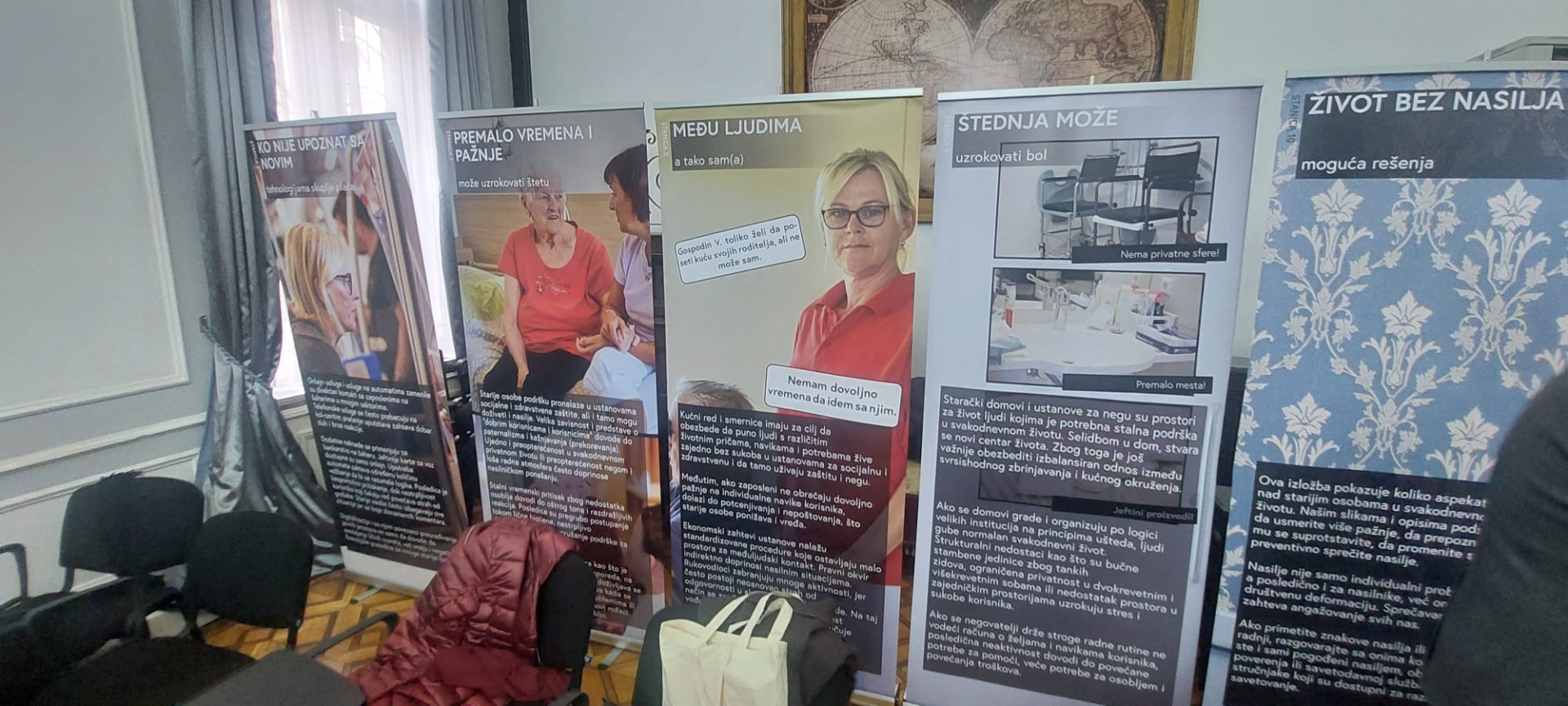
In recent years, significant focus has been placed on raising awareness about violence against older persons, dementia-related issues, and support for informal caregivers. Several relevant studies have been conducted in these areas, serving as a basis for further advocacy and the improvement of policies and services. Promoting active ageing and improving the way older people are represented in public discourse are also important segments of the Network’s work. Each year, the Humanas Network jointly marks 1 October – the International Day of Older Persons and 15 June – the World Elder Abuse Awareness Day – through a series of public actions, panel discussions, and educational events.
In its work, Humanas maintains continuous cooperation with numerous institutions and organizations, including: the Republic Institute for Social Protection, the Commissioner for the Protection of Equality, the Ministry of Labour, Employment, Veteran and Social Affairs, the World Health Organization (WHO), UNFPA – the United Nations Population Fund, and the international organization HelpAge.
In the upcoming period, the Humanas Network will continue to strengthen its role as one of the key advocacy actors in the field of ageing in Serbia, focusing on systemic solutions and the development of sustainable support services for older persons. Among its priorities is advocacy for the establishment of day care centers for people with dementia, first in Belgrade and later in other cities across Serbia, as an important form of support for both persons with dementia and their families. At the same time, the Network will continue activities aimed at combating discrimination and violence against older persons, through raising public awareness and improving protection mechanisms.
Special emphasis will be placed on the development of integrated social and health care services, particularly in the field of long-term care, having in mind the share of older persons stands at 22.6 percent of Serbia’s total population. In this context, Humanas will also advocate for improving the quality and further professionalization of the Home Care Assistance, which is one of the key services supporting the process of deinstitutionalization. The Network’s plans also include further development of its organizational structure, strengthening professional capacities and partnerships at both national and international levels.
Our goal remains the same: a society in which older persons have the right to active participation, security, and a dignified life.